





B Tech in Data Science and Artificial Intelligence
Introduction to B Tech in Data Science and Artificial Intelligence
What is B Tech in Data Science and Artificial Intelligence?
B Tech in Data Science and Artificial Intelligence is a four-year undergraduate engineering program designed to prepare students for careers in one of the most revolutionary technological fields of the 21st century. This degree blends core computer science principles with advanced topics in data analytics, machine learning, deep learning, artificial intelligence, and big data technologies.
Imagine teaching machines how to think, learn, and make decisions — that is exactly what this course prepares you to do. Data science focuses on extracting meaningful insights from massive volumes of data, while artificial intelligence focuses on building systems that can simulate human intelligence. When combined, these two domains create powerful, intelligent solutions that can predict outcomes, automate tasks, and solve complex real-world problems.
This program is not just about coding. It is about understanding patterns, solving problems logically, analyzing data deeply, and designing intelligent systems that can adapt and evolve. Students learn both theoretical foundations and practical implementation, ensuring they are industry-ready by graduation.
Why is This Course Becoming So Popular?
The world today runs on data. Every click, purchase, message, and transaction generates information. Companies that know how to use this data effectively dominate their industries. From global tech giants to small startups, organizations are investing heavily in AI-driven solutions.
Artificial intelligence powers voice assistants, recommendation engines, autonomous vehicles, fraud detection systems, and even medical diagnostics. Data science helps businesses forecast trends, optimize operations, and personalize customer experiences.
Because of this rapid digital transformation, the demand for skilled professionals in AI and data science has skyrocketed. Students are choosing this course because it offers strong job security, high salary potential, global career opportunities, and the chance to work on cutting-edge technology that shapes the future.
Course Structure and Academic Overview
Duration of the Program
The B Tech in Data Science and Artificial Intelligence program typically spans four years, divided into eight semesters. Each year builds upon the previous one, gradually moving from foundational knowledge to advanced specialization.
In the first year, students focus on core engineering subjects such as mathematics, programming fundamentals, and basic computer science concepts. As they progress into the second and third years, the curriculum becomes more specialized, introducing machine learning, artificial intelligence, big data analytics, and cloud computing. The final year often includes industry internships, capstone projects, and research work, giving students hands-on experience.
Eligibility Criteria
To pursue this degree, students must complete their higher secondary education (10+2) with Physics, Chemistry, and Mathematics as core subjects. Mathematics is especially important because many AI and data science algorithms are built on statistical and mathematical principles.
Most institutions require a minimum aggregate percentage, typically between 50% and 75%, depending on the college’s reputation and competitiveness. Strong analytical thinking, logical reasoning skills, and an interest in programming can significantly help students succeed in this field.
Admission Process and Entrance Exams
Admission into reputed engineering institutions usually requires clearing competitive entrance examinations. National-level exams such as JEE Main or state-level engineering entrance exams are commonly accepted. Some private universities conduct their own entrance tests or offer admission based on merit.
These exams test students’ understanding of mathematics, physics, chemistry, and logical reasoning. Performing well in these exams increases the chances of securing admission into top colleges offering advanced infrastructure and strong industry connections.
Core Subjects and Curriculum Details
Mathematics for AI and Data Science
Mathematics is the backbone of artificial intelligence and data science. Students study linear algebra, calculus, probability theory, and statistics in depth. These concepts are essential for understanding how machine learning models function.
For example, linear algebra helps in understanding vector operations and neural networks, while probability and statistics are used in predictive modeling and data analysis. Without a strong mathematical foundation, building accurate AI systems would be nearly impossible.
Programming Languages and Software Development
Programming is a critical skill in this course. Students learn languages such as Python, Java, C++, and sometimes R. Python is especially important because it has powerful libraries like NumPy, Pandas, TensorFlow, and Scikit-learn that are widely used in AI development.
Students work on coding assignments, lab experiments, and real-world projects. They learn how to write efficient algorithms, manage databases, and deploy applications.
Machine Learning
Machine learning is the heart of this degree. Students learn how algorithms can analyze data and improve automatically without explicit programming. They explore supervised learning, unsupervised learning, regression models, classification techniques, decision trees, and clustering algorithms.
Machine learning enables systems to detect patterns in data and make predictions. It is used in spam detection, recommendation systems, stock price forecasting, and many other applications.
Deep Learning and Neural Networks
Deep learning is a specialized branch of machine learning focused on artificial neural networks. Students learn about convolutional neural networks (CNNs), recurrent neural networks (RNNs), and advanced deep learning architectures.
These techniques are used in image recognition, speech processing, natural language understanding, and autonomous systems. Deep learning allows machines to process complex data such as images and audio with remarkable accuracy.
Big Data Analytics
Big data analytics focuses on managing and processing massive datasets. Students learn tools such as Hadoop, Spark, and distributed computing systems. In the real world, organizations deal with terabytes and petabytes of data daily.
Understanding how to store, process, and analyze large-scale data efficiently is crucial for modern AI applications.
Artificial Intelligence Fundamentals
This subject introduces concepts such as intelligent agents, search algorithms, knowledge representation, reasoning systems, and decision-making processes. It lays the foundation for building systems that mimic human cognitive functions.
Natural Language Processing (NLP)
NLP enables machines to understand and interpret human language. Students explore text processing, sentiment analysis, speech recognition, and chatbots.
Computer Vision
Computer vision allows machines to interpret visual information. Applications include facial recognition, object detection, and autonomous driving systems.
Skills Developed During the Program
Technical and Analytical Skills
Students develop strong technical skills in programming, data analysis, algorithm design, and AI model development. They also learn to work with cloud computing platforms and data visualization tools.
Analytical thinking becomes second nature. Students learn to approach problems logically, break them into smaller components, and solve them systematically.
Problem-Solving and Critical Thinking
The program trains students to handle complex real-world challenges. Whether designing a predictive model or optimizing a system, critical thinking is essential.
Communication and Team Collaboration
Working on group projects and internships helps students improve teamwork and communication skills. Explaining technical concepts clearly is crucial when working in interdisciplinary teams.
Career Opportunities After B Tech in Data Science and AI
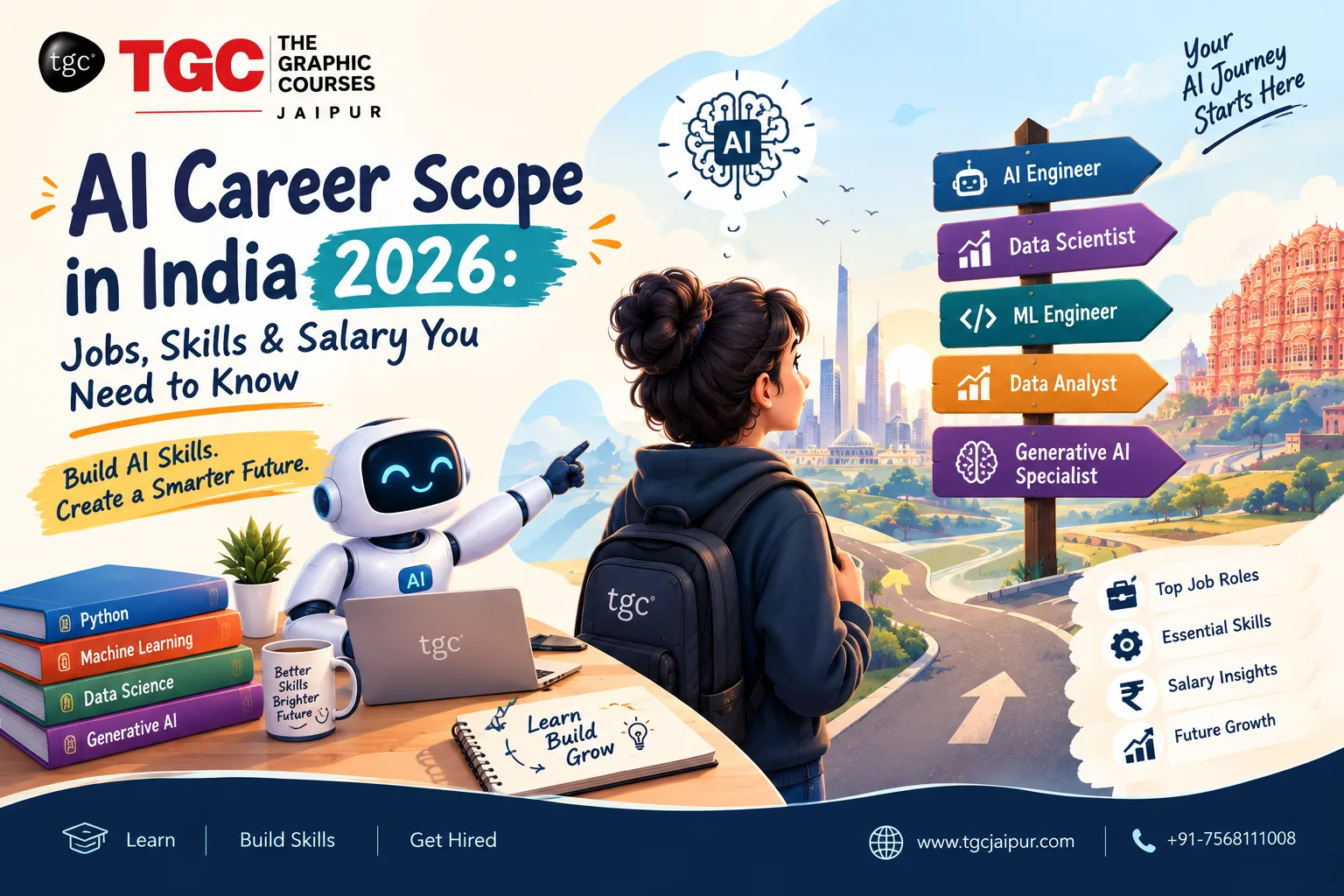
Graduates have access to a wide range of high-demand job roles, including:
- Data Scientist
- Machine Learning Engineer
- AI Engineer
- Data Analyst
- Business Intelligence Developer
- AI Researcher
- Big Data Engineer
These professionals work across industries such as healthcare, finance, e-commerce, automotive, cybersecurity, and technology startups.
Salary Expectations and Growth Potential
Entry-level professionals can earn competitive salaries, often higher than those in many traditional engineering fields. With experience and specialization, salaries increase significantly.
Mid-level professionals with 3–5 years of experience often handle advanced AI systems and lead projects. Senior-level experts and AI architects command very high salaries due to their expertise and leadership roles.
Freelancing and remote opportunities also provide additional earning potential.
Future Scope of B Tech in Data Science and AI
The future of this field is incredibly promising. Artificial intelligence is becoming deeply integrated into daily life — from smart homes and wearable devices to automated industries and intelligent healthcare systems.
Governments and organizations worldwide are investing heavily in AI research and development. As technology evolves, new career opportunities will continue to emerge.
Conclusion
B Tech in Data Science and Artificial Intelligence is more than just an engineering degree. It is a gateway to innovation, creativity, and technological advancement. This program equips students with the skills needed to build intelligent systems, analyze complex data, and drive digital transformation.
If you are passionate about technology, mathematics, and solving real-world problems, this degree offers a rewarding and future-proof career path. The world is moving toward intelligent automation — and this course places you right at the center of that revolution.
FAQs
1. Is B Tech in Data Science and AI difficult?
It requires strong dedication, especially in mathematics and programming, but with consistent effort, it is manageable.
2. What is the difference between Data Science and AI?
Data science focuses on extracting insights from data, while AI focuses on building intelligent systems that simulate human behavior.
3. Can I pursue higher studies after this degree?
Yes, students can opt for M Tech, MS abroad, MBA, or specialized certifications in AI and machine learning.
4. Are internships important in this field?
Yes, internships provide practical exposure and significantly improve job prospects.
5. What industries hire AI and data science graduates?
Healthcare, finance, retail, automotive, cybersecurity, technology, and research organizations actively hire professionals in this domain.
Recently Added Articles



.webp)






 Book A Free Demo
  7568111008
 Apply Now


 Please select course category