





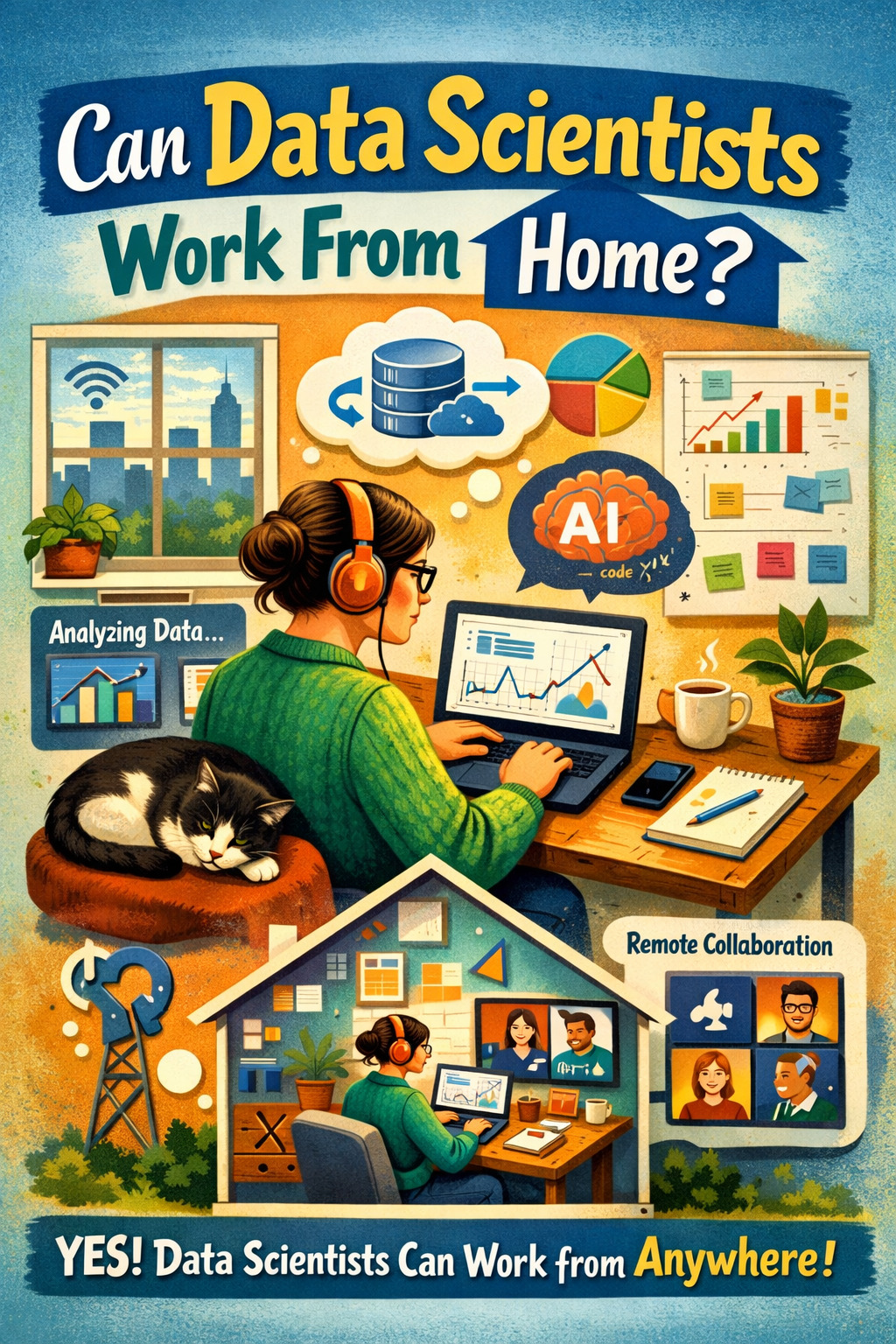
Can Data Scientists Work From Home?
Introduction to Remote Data Science
The Global Shift Toward Remote Work
Let’s start with a simple question: when was the last time work was strictly tied to a physical building? For decades, we believed productivity required a desk inside an office. Then the world changed. Technology evolved. Internet speeds skyrocketed. Cloud computing became mainstream. Suddenly, entire companies realized something powerful — work is something you do, not somewhere you go.
Remote work is no longer just a perk offered by progressive startups. It has become a strategic advantage for businesses aiming to reduce overhead costs and attract global talent. Industries that rely heavily on digital tools transitioned more smoothly than those that do not. And among those industries, data science stood out almost immediately.
Why Data Science Naturally Aligns with Remote Work
Think about it. What does a data scientist truly need to perform their job? Access to datasets, analytical tools, computing power, and communication channels with their team. None of these requires a physical office. Data lives on servers. Models run on cloud platforms. Meetings happen on video calls.
Data science is inherently digital. The work revolves around extracting insights from information stored electronically. Whether you are sitting in a corporate office in New York or at a desk in your apartment halfway across the world, the workflow remains almost identical. This natural alignment makes data science one of the most remote-friendly careers in the modern job market.
Understanding the Role of a Data Scientist
Daily Responsibilities Explained
Before answering whether data scientists can work from home, it’s important to understand what they actually do daily. A data scientist’s role is multifaceted. One day might involve cleaning messy datasets filled with missing values. Another day could be dedicated to building machine learning models that predict customer behavior.
Data scientists gather raw data from various sources — databases, APIs, spreadsheets, or cloud storage systems. They preprocess and clean that data to ensure accuracy. Following this is an exploratory analysis, where patterns and trends begin to emerge. Then they build predictive or descriptive models to answer business questions.
Finally, and perhaps most importantly, they communicate their findings. A brilliant model means nothing if decision-makers cannot understand its implications. So data scientists often create dashboards, visualizations, and reports that translate complex numbers into actionable insights.
Every one of these tasks can be performed remotely.
Key Tools and Technologies
Programming Languages
Data scientists primarily use programming languages such as Python, R, and SQL. These languages run locally on personal machines or through cloud-based environments like Jupyter Notebooks. There is no need for a company office to execute code.
Cloud Platforms and Big Data Tools
Modern data science frequently involves cloud platforms such as AWS, Google Cloud, or Microsoft Azure. These services allow professionals to store data, train models, and deploy applications entirely online. Big data tools like Hadoop and Spark are also accessible through remote servers.
In other words, the computational backbone of data science already exists in the cloud.
Communication and Collaboration Software
Remote teams rely on collaboration tools such as Slack, Zoom, Microsoft Teams, and project management software like Jira or Trello. These platforms ensure that communication flows smoothly even when team members are geographically dispersed.
Is It Truly Possible for Data Scientists to Work From Home?
Fully Remote Data Science Jobs
Yes, fully remote data science jobs absolutely exist — and they are growing rapidly. Many tech companies have embraced remote-first policies, meaning employees are not expected to report to a physical office at all.
In fully remote roles, all meetings occur virtually. Performance is measured by results, not physical presence. This model works especially well for experienced data scientists who can operate independently and manage their workload effectively.
Hybrid Work Models
Some organizations prefer a hybrid approach. In this setup, data scientists may work from home several days a week and visit the office occasionally for strategic meetings or team-building activities. This model balances flexibility with in-person collaboration.
Freelance and Consulting Opportunities
Freelancing is another powerful path. Businesses often hire remote data scientists for short-term projects such as predictive modeling, dashboard creation, or analytics audits. Freelancers can work with multiple clients simultaneously, offering flexibility and potentially higher hourly earnings.
Major Benefits of Working From Home as a Data Scientist
Flexibility and Lifestyle Freedom
Imagine designing your workday around your peak productivity hours. Some people focus best early in the morning. Others hit their stride late at night. Remote work allows you to align your schedule with your natural rhythm.
Without commuting, you reclaim hours each week. That time can be invested in learning new skills, exercising, or spending time with family.
Productivity and Deep Work
Data science often requires deep concentration. Writing complex algorithms or debugging models demands uninterrupted focus. Working from home can create an environment conducive to deep work, free from office distractions.
Global Career Opportunities
When location is no longer a limitation, your job market expands globally. You can work for companies in different countries without relocating. This dramatically increases career opportunities and earning potential.
Financial Advantages
Remote work reduces commuting costs, daily meals outside, and even wardrobe expenses. Over time, these savings can significantly improve your financial stability.
Real Challenges of Remote Data Science Roles
Communication Gaps
Without face-to-face interaction, misunderstandings can arise. Clear written communication becomes essential. Remote data scientists must articulate ideas precisely.
Data Privacy and Security Risks
Working with sensitive data remotely requires secure connections, VPNs, encryption, and strict compliance policies. Companies often implement robust cybersecurity measures to mitigate risks.
Isolation and Mental Health
Humans are social creatures. Prolonged isolation can impact mental health. Remote professionals must proactively maintain social interactions.
Managing Time Zones and Boundaries
Global teams often operate across multiple time zones. Flexibility is required, but so are boundaries to prevent burnout.
Salary Expectations for Remote Data Scientists
Remote data scientists often earn salaries comparable to in-office roles. Entry-level positions may start at competitive rates, while senior professionals can command six-figure incomes depending on experience and industry.
Freelancers may charge hourly rates that exceed traditional salaries but must manage inconsistent income streams and lack employer-provided benefits.
The Future of Remote Data Science Careers
The demand for data-driven decision-making continues to grow. Companies increasingly rely on analytics to stay competitive. As long as businesses depend on data, skilled professionals will remain in demand.
Remote work is not fading — it is evolving. And data science sits comfortably at the center of this transformation.
Conclusion
So, can data scientists work from home? Without a doubt, yes.
The digital nature of data science makes it uniquely suited for remote environments. While challenges exist, the benefits — flexibility, global access, and improved work-life balance — make remote data science an attractive and sustainable career path.
If you have the skills, discipline, and communication ability, your office can truly be anywhere.
FAQs
1. Are remote data science jobs secure?
Yes, provided companies implement proper cybersecurity measures such as VPNs and encryption protocols.
2. Do remote data scientists earn less?
Not necessarily. Many earn comparable salaries to their in-office counterparts.
3. Is remote work suitable for beginners?
It can be, but beginners may benefit from structured mentorship environments.
4. What equipment is required?
A powerful computer, stable internet, and access to cloud platforms are essential.
5. Will remote data science remain popular in the future?
Given the digital transformation across industries, remote data science is expected to continue growing.
Recently Added Articles



.webp)





 Book A Free Demo
  7568111008
 Apply Now


 Please select course category