





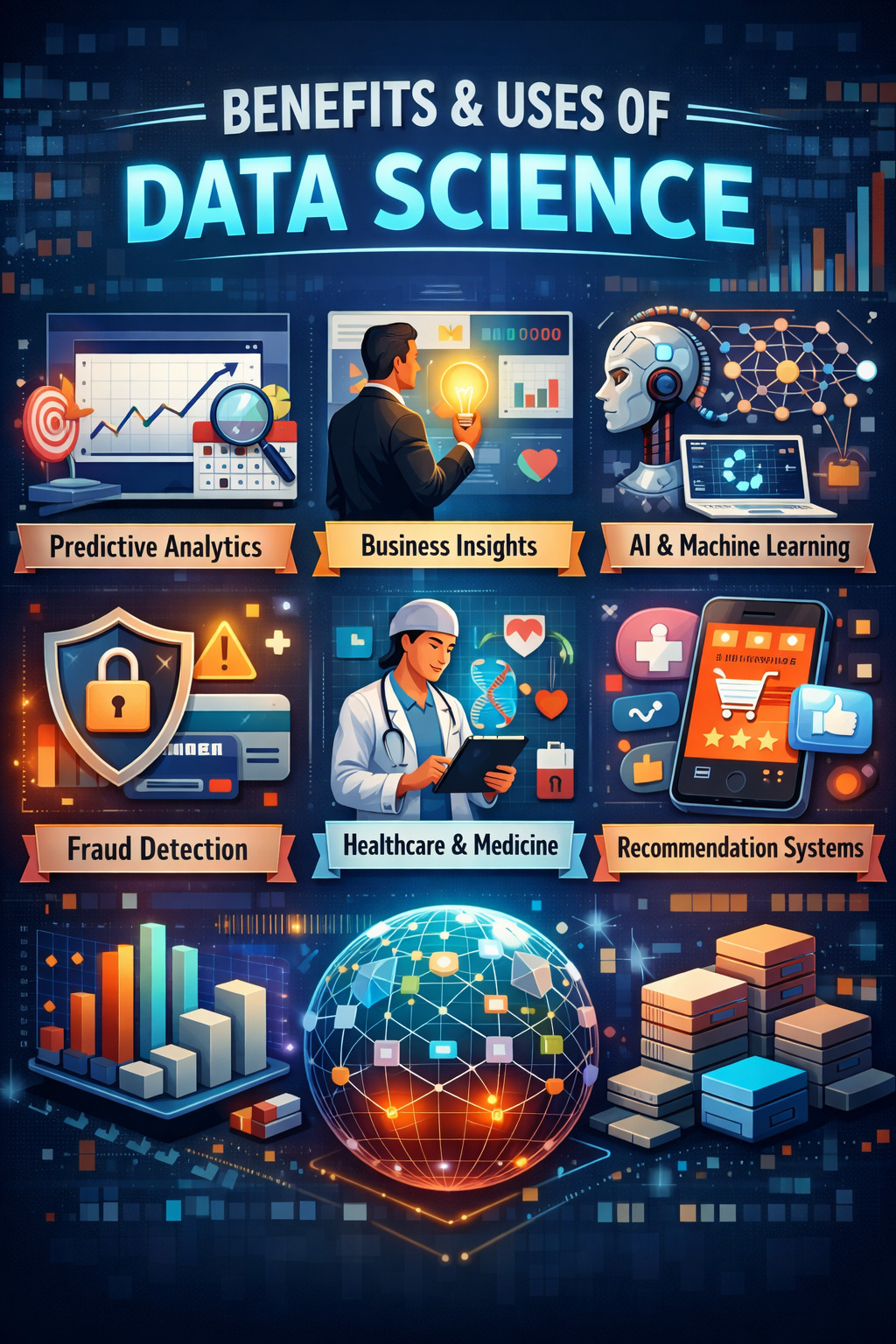
Benefits and Uses of Data Science
Introduction to Data Science
What is Data Science?
Data science is not just about numbers on a spreadsheet or charts on a dashboard. It is a multidisciplinary field that combines statistics, mathematics, computer science, and domain expertise to extract meaningful insights from raw data. Think of it like mining for gold. The raw data is the dirt and rocks, and data science is the process of digging, filtering, and refining until you uncover valuable nuggets of information.
At its core, data science involves collecting large amounts of structured and unstructured data, processing it, analyzing it, and then transforming it into actionable insights. These insights help businesses, governments, and organizations make smarter decisions. Whether it is predicting customer behavior, identifying fraud, improving medical diagnoses, or optimizing supply chains, data science plays a powerful role behind the scenes.
In today’s digital age, nearly every action we take generates data. From online shopping to social media interactions, GPS tracking to online banking — data is constantly being created. Without data science, most of this information would remain unused and meaningless.
Why Data Science Matters Today
We are living in a data-driven era. Every second, massive volumes of data are generated across the globe. Companies that can analyze and interpret this information gain a significant competitive advantage. Data science allows organizations to move from guesswork to precision.
Imagine running a business based purely on instinct. You might make good decisions sometimes, but you would also face high risks. Now imagine having access to detailed insights about customer preferences, market trends, operational efficiency, and financial risks. That is the power of data science.
Governments use data science for public policy planning. Hospitals use it to improve patient care. Financial institutions rely on it to detect fraud. Even sports teams use data analytics to enhance player performance and strategy. In short, data science has become essential in almost every industry.
Core Components of Data Science
Data Collection
Everything in data science begins with data collection. Organizations gather information from multiple sources, such as customer transactions, website visits, mobile applications, IoT devices, surveys, and social media platforms. The quality and quantity of collected data significantly influence the outcome of the analysis.
Data collection is not just about gathering large volumes of information; it is about collecting relevant and accurate data. If the data is incomplete or biased, the results will also be flawed. Businesses invest heavily in building systems that capture reliable data in real time.
For example, e-commerce platforms track browsing behavior, purchase history, and customer preferences. This data becomes the foundation for recommendation systems and marketing campaigns.
Data Cleaning and Preparation
Raw data is rarely perfect. It often contains missing values, duplicates, inconsistencies, and errors. Data cleaning involves correcting these issues to ensure the dataset is accurate and reliable. This step may seem tedious, but it is one of the most critical parts of the data science process.
Imagine trying to build a house on a weak foundation. No matter how beautiful the design is, the structure will eventually collapse. Similarly, poor-quality data leads to inaccurate models and unreliable conclusions.
Data preparation also includes transforming data into a usable format. This might involve normalization, scaling, encoding categorical variables, or aggregating information. Proper preparation ensures that analytical models perform effectively.
Data Analysis and Modeling
Once the data is clean, analysts apply statistical techniques and machine learning algorithms to uncover patterns and trends. This stage transforms raw information into meaningful insights.
Data modeling can be descriptive, predictive, or prescriptive. Descriptive analysis explains what has happened. Predictive analysis forecasts what is likely to happen in the future. Prescriptive analysis recommends actions to achieve desired outcomes.
For instance, a retail company may use predictive modeling to forecast demand for certain products during holiday seasons. This helps them manage inventory and avoid stock shortages or overstocking.
Data Visualization and Communication
Data insights must be communicated clearly to stakeholders. Data visualization tools such as dashboards, graphs, and interactive reports make complex information easier to understand.
Effective communication is often overlooked but extremely important. Decision-makers may not have technical expertise, so data scientists must translate technical findings into simple language. A well-designed visualization can turn complex statistics into a compelling story that drives action.
Major Benefits of Data Science
Improved Decision-Making
One of the most significant benefits of data science is enhanced decision-making. Businesses no longer rely solely on intuition or assumptions. Instead, they use real data to guide strategies.
For example, a company considering launching a new product can analyze market trends, customer preferences, and competitor performance before making a decision. This reduces risk and increases the likelihood of success.
Increased Business Efficiency
Data science identifies inefficiencies within processes and operations. By analyzing workflow data, organizations can pinpoint bottlenecks and optimize performance.
Manufacturing companies use data analytics to monitor machine performance and schedule predictive maintenance. This reduces downtime and increases productivity. Similarly, logistics companies use route optimization algorithms to reduce delivery time and fuel consumption.
Cost Reduction
Cost management is crucial for every organization. Data science helps reduce operational expenses by identifying waste and improving resource allocation.
For example, predictive analytics can forecast demand accurately, preventing overproduction and minimizing inventory holding costs. Financial institutions use fraud detection algorithms to prevent financial losses.
Enhanced Customer Experience
Modern customers expect personalized experiences. Data science makes personalization possible by analyzing user behavior and preferences.
Streaming platforms recommend movies based on viewing history. Online stores suggest products tailored to individual interests. Personalized marketing campaigns increase engagement and customer satisfaction.
Competitive Advantage
Companies that leverage data science gain a strategic advantage. They can respond quickly to market changes, identify emerging trends, and innovate effectively.
Data-driven organizations are more agile and better equipped to navigate uncertainties in competitive markets.
Uses of Data Science in Different Industries
Healthcare
In healthcare, data science improves patient care and medical research. Predictive models assist doctors in diagnosing diseases early. Hospitals analyze patient data to optimize treatment plans and reduce readmission rates.
Medical imaging powered by AI enhances accuracy in detecting conditions such as cancer. Public health agencies use data analytics to track disease outbreaks and manage healthcare resources.
Finance
The financial industry heavily relies on data science for risk assessment, fraud detection, and algorithmic trading. Machine learning models analyze transaction patterns to identify suspicious activities instantly.
Credit scoring models evaluate customer risk profiles. Investment firms use predictive analytics to optimize portfolios and maximize returns.
Retail and E-commerce
Retailers use data science to understand consumer behavior, manage inventory, and personalize marketing strategies. Dynamic pricing models adjust product prices based on demand and competition.
Recommendation systems significantly increase sales by suggesting relevant products to customers.
Marketing and Advertising
Data science enables marketers to target specific audiences with precision. By analyzing customer data, companies create tailored advertisements that resonate with individual preferences.
Campaign performance metrics help marketers refine strategies and maximize return on investment.
Education
Educational institutions use data analytics to monitor student performance and improve learning outcomes. Personalized learning platforms adapt content based on student progress.
Manufacturing
Predictive maintenance powered by data science reduces equipment failures and production delays. Quality control systems analyze production data to detect defects early.
Transportation and Logistics
Transportation companies use route optimization algorithms to reduce fuel consumption and delivery times. Ride-sharing platforms rely on data science to match drivers with passengers efficiently.
Future Trends in Data Science
The future of data science is exciting and full of possibilities. Artificial intelligence and machine learning will continue to evolve, enabling more advanced predictive models. Real-time analytics will become standard, allowing businesses to make instant decisions.
Automation will increase, reducing manual tasks and improving efficiency. As technology advances, data science will become even more integrated into daily life.
Conclusion
Data science is transforming industries across the globe. Its benefits extend from improved decision-making and cost reduction to enhanced customer experiences and competitive advantage.
In a world driven by data, organizations that embrace data science will thrive. Those who ignore it risk falling behind. The future belongs to those who can harness the power of information effectively.
FAQs
1. What are the key benefits of data science?
Improved decision-making, operational efficiency, cost reduction, personalization, and competitive advantage.
2. How is data science used in business?
Businesses use it for forecasting, marketing optimization, fraud detection, customer segmentation, and performance analysis.
3. Is data science difficult to implement?
It requires investment in technology and skilled professionals, but the long-term benefits outweigh the challenges.
4. What industries benefit the most from data science?
Healthcare, finance, retail, manufacturing, transportation, and marketing benefit significantly.
5. What is the future scope of data science?
The demand for data science professionals will continue growing as more industries rely on analytics and AI technologies.
Recently Added Articles



.webp)








 Book A Free Demo
  7568111008
 Apply Now


 Please select course category