





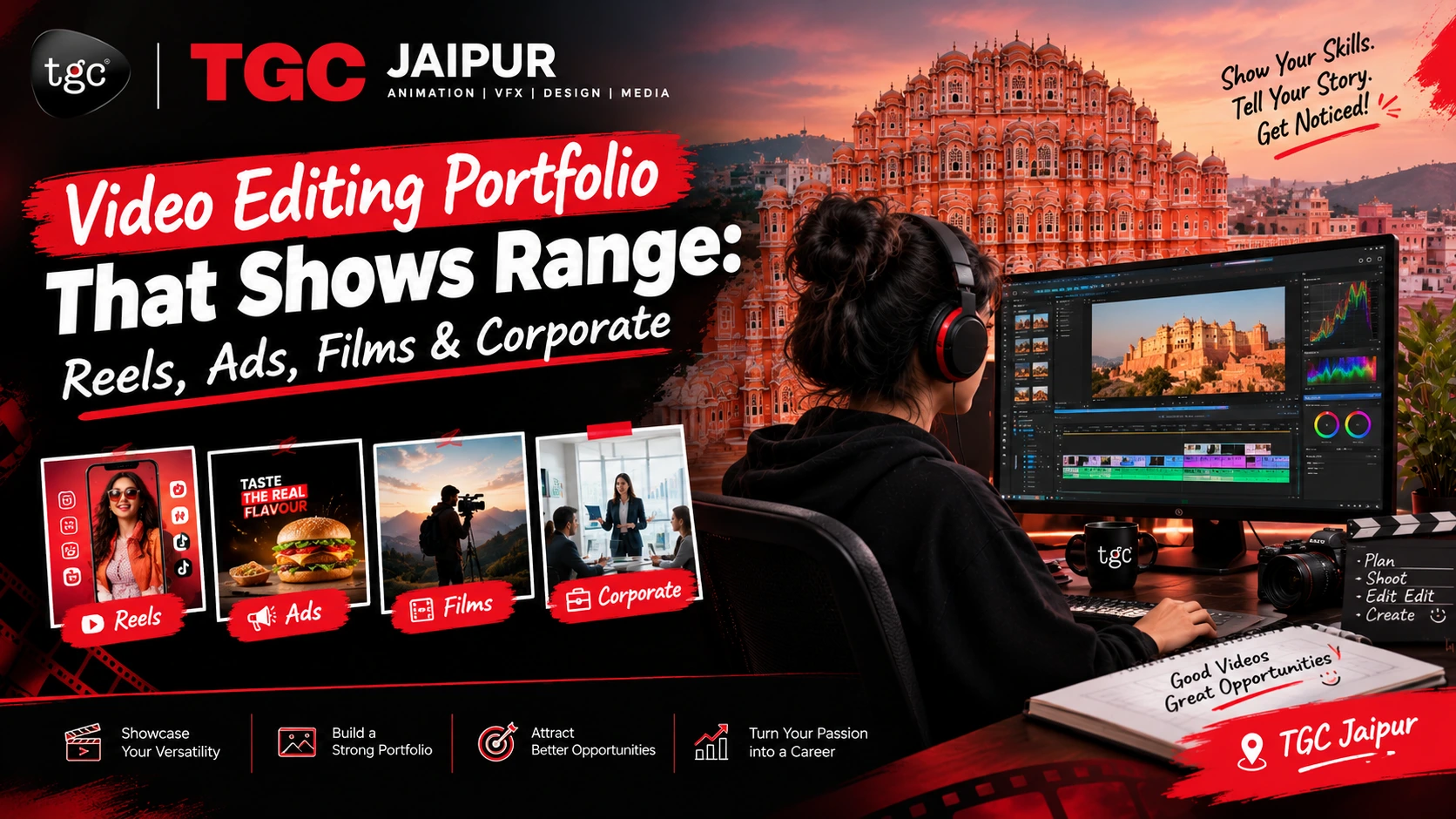
Video Editing Portfolio That Shows Range: Reels, Ads, Films & Corporate
Last updated on Oct 27, 2026


Introduction
Two editors apply for the same job. Both know Premiere Pro. Both have a showreel. One reel is thirty seconds of trendy transitions. The other shows a punchy Instagram reel, a polished product ad, a short cinematic piece, and a clean corporate interview, each edited in a way that clearly suits its purpose. Which editor looks easier to trust with a client's brief?
That's the power of range. Clients don't hire "someone who can edit." They hire someone who can solve their kind of video problem. A portfolio that shows you understand reels, ads, films, and corporate content proves you can adapt, and that opens far more doors, especially in a city like Jaipur where wedding films, heritage hospitality, jewelry and textile brands, startups, and content creators all need video.
This guide shows you exactly what to put in each section of your portfolio, how to build projects when you don't have clients yet, and how to present everything so it gets you hired.
Why Range Matters in a Video Editing Portfolio
- Different clients, different needs. A café owner wants a scroll-stopping reel. A jewelry brand wants an elegant ad. A hotel wants a cinematic walkthrough. A company wants a clear explainer
- It proves editing skill, not a single trick. Anyone can copy one style. Switching styles convincingly shows real understanding of pacing, sound, and storytelling
- It widens your job and freelance options. Agencies, production houses, brands, and creators each hire differently, and range lets you apply to all of them
- It protects you from trends. Short-form styles change fast. A balanced portfolio holds up when one format cools down
Range doesn't mean doing everything. It means showing a few distinct formats done well.
The Four Pillars of a Range-Focused Portfolio
| Pillar | What It Proves | Typical Clients |
|---|---|---|
| Reels and short-form | Speed, hooks, trend-awareness, vertical storytelling | Creators, cafés, salons, boutiques, local businesses |
| Ads and promos | Persuasion, polish, brand feel, tight timing | Brands, agencies, e-commerce, real estate |
| Films and cinematic pieces | Storytelling, rhythm, color, sound design | Wedding studios, production houses, hospitality, filmmakers |
| Corporate and explainer videos | Clarity, structure, professionalism | Companies, institutes, startups, NGOs |
Aim for one or two strong pieces in each pillar. Eight to ten finished videos are plenty.
Pillar 1: Reels and Short-Form Content
What clients want: Attention in the first second, clear messaging, and a style that fits the platform.
What to show:
- A strong hook in the opening one to two seconds
- Fast, clean cuts matched to music beats
- Captions or on-screen text that are readable on a phone
- Smooth, purposeful transitions (not every transition in your toolbox)
- Vertical framing (9:16) with safe margins so text isn't hidden by app buttons
Project ideas:
| Idea | Skills Practiced |
|---|---|
| A café or food reel | Beat-synced cuts, close-ups, color |
| A fashion or jewelry showcase | Rhythm, transitions, premium feel |
| A "day in the life" or travel reel of Jaipur | Storytelling in under 30 seconds |
| A before-and-after or tutorial reel | Clear structure and captions |
| A podcast or interview clip with captions | Repurposing long content |
Portfolio tip: Show two or three reels in different styles, such as an energetic one and a calm, aesthetic one, to prove you aren't a one-trick editor.
Pillar 2: Ads and Promos
What clients want: A clear message, a feeling about the brand, and a reason for the viewer to act.
What to show:
- A tight structure: hook, benefit, proof, call to action
- Polished color grading and consistent brand look
- Clean motion graphics, logo animation, and end cards
- Strong sound design: music, effects, and voice-over balance
- Versions for different formats, such as a 30-second horizontal ad and a 15-second vertical cut
Project ideas:
| Idea | Skills Practiced |
|---|---|
| A product ad for a local brand | Pacing, close-ups, branding |
| A real estate or hotel promo | Smooth movement, mood, location showcase |
| An app or service explainer ad | Motion graphics and clear messaging |
| An offer or festive sale video | Fast turnarounds and text animation |
Portfolio tip: Show the same ad cut in two lengths. It demonstrates you understand that platforms and budgets change the edit.
Pillar 3: Films and Cinematic Pieces
What clients want: Emotion, rhythm, and craft. This is where your storytelling instincts show.
What to show:
- A clear narrative arc, even in a two-minute piece
- Deliberate pacing: moments of calm, moments of energy
- Cinematic color grading with a consistent look
- Layered sound design: ambience, music, and effects
- Smooth continuity and thoughtful use of cutaways
Project ideas:
| Idea | Skills Practiced |
|---|---|
| A short film, even one to three minutes | Story structure and pacing |
| A wedding or event highlight film | Emotion, rhythm, and music-driven editing |
| A travel or heritage film on Jaipur's forts and markets | Cinematic color and sound design |
| A music video or lyric-style piece | Beat-based editing and visual style |
| A documentary-style mini story about a local craftsperson | Interviews, B-roll, and narrative |
Portfolio tip: Quality beats length. A tight two-minute film with great sound and grading is more impressive than a rambling ten-minute one.
Pillar 4: Corporate and Explainer Videos
What clients want: Clarity, credibility, and professionalism. Flashy tricks can hurt here.
What to show:
- Clean interview editing: balanced audio, tidy cuts, and respectful pacing
- Lower thirds, titles, and subtitles that are legible and consistent
- Simple infographics and animated text that clarify information
- A calm, branded look that fits the company
- Clear structure: introduction, key points, conclusion
Project ideas:
| Idea | Skills Practiced |
|---|---|
| A company or institute introduction video | Structure and branding |
| A talking-head interview or testimonial | Audio cleanup and clean cutting |
| An explainer video with animated text | Motion graphics and clarity |
| An event recap for a seminar or launch | Multi-camera or multi-clip storytelling |
| A training or how-to video | Screen recordings, callouts, and step-by-step flow |
Portfolio tip: Corporate editors win on reliability. Show clean audio, accurate captions, and consistent branding.
How to Build Projects If You Have No Clients Yet
Every editor starts with an empty portfolio. These routes work:
- Edit for friends, family, and local businesses. A neighborhood café or boutique often welcomes free or low-cost reels in exchange for permission to showcase the work
- Create speculative projects. Make a "what if" ad for a brand you like, clearly labeled as a concept
- Shoot your own footage. Jaipur's forts, markets, and festivals give you rich visuals; record B-roll yourself so you have full rights
- Use free and licensed footage. Stock footage sites and royalty-free libraries offer practice material when you read their license terms
- Re-edit existing material. Cut a new trailer for a public-domain film or recut an interview you have permission to use
- Collaborate with others. Team up with photographers, models, musicians, or student filmmakers and share credit
A copyright note: Use music and footage you have rights to. Royalty-free tracks and licensed libraries protect your portfolio from takedowns and keep you professional.
How to Structure Your Showreel
Your showreel is a 60 to 90 second highlight video that gives a fast impression of your range.
| Time | What to Show |
|---|---|
| 0 to 5 seconds | Your strongest shot or edit. Hook the viewer immediately |
| 5 to 30 seconds | Quick cuts of your best work across reels, ads, films, and corporate pieces |
| 30 to 60 seconds | Slightly longer clips that show pacing, color, and sound |
| Final 5 to 10 seconds | Your name, role, and contact details |
Rules for a strong showreel:
- Put your best work first and last
- Don't include anything you wouldn't be proud to explain
- Match the music to the pace of your cuts
- Keep it under 90 seconds
- Update it as you improve
Where to Host and Present Your Work
| Platform | Best For |
|---|---|
| YouTube or Vimeo | Showreel and full projects |
| Reels and short-form samples | |
| Behance | Case studies with process breakdowns |
| Google Drive or a simple website | Sharing a curated link with clients |
| Corporate and agency visibility |
Make your portfolio easy to open on a phone. Many clients will click your link from a WhatsApp message.
Add Mini Case Studies
For your top three projects, add a short note covering:
- The brief: what the client or project needed
- Your role: editing, color grading, sound, motion graphics, or all of the above
- The approach: key decisions about pacing, style, and structure
- Tools used: Premiere Pro, DaVinci Resolve, After Effects, and so on
- The result: views, client feedback, or what you learned
Explaining your choices signals professionalism and separates you from editors who only upload clips.
Common Portfolio Mistakes to Avoid
- Showing everything you've ever edited. Quality beats quantity
- One style for every project. It makes you look limited
- Ignoring audio. Poor sound ruins good visuals
- Overusing effects. Restraint reads as skill
- No context. Viewers should know what each piece is and what you did
- A slow, long intro. Clients often watch for ten seconds
- Unlabeled concept work. Be honest about what is client work and what is practice
- Broken links and low-resolution uploads. Check everything before you send it
Pitching Your Portfolio in Jaipur
Jaipur's market gives video editors several entry points:
| Opportunity | What They Look For |
|---|---|
| Wedding and event studios | Emotional highlight films, fast delivery, cinematic grading |
| Heritage hotels, resorts, and tourism brands | Elegant, cinematic walkthroughs and promos |
| Jewelry, textile, and handicraft brands | Premium product ads and social reels |
| Startups and D2C brands | Fast, trendy short-form content |
| Content creators and YouTubers | Consistent, engaging long-form and short-form edits |
| Agencies and production houses | Versatility and reliable turnaround |
| Corporate and educational institutes | Clean, professional explainers and event videos |
Send a short message with your showreel link and two or three relevant pieces tailored to that client. A jewelry brand cares about your ad and product work; a wedding studio cares about your emotional storytelling.
Where to Build a Portfolio With Guidance in Jaipur
A portfolio improves fastest when someone experienced reviews it. TGC Jaipur's Video Editing with AI Course is built around hands-on projects with Adobe Premiere Pro and DaVinci Resolve, covering color grading, sound design, motion graphics, and AI-powered editing workflows, so you finish with polished work across multiple formats and direct feedback from trainers.
To specialize further, explore the Adobe Premiere Pro course for advanced editing workflows and the After Effects course for motion graphics and compositing, which add serious polish to ads and corporate videos. Students in different areas of the city can join the Video Editing Course in Vaishali Nagar, and you can browse every program in the TGC Jaipur course catalog.
Frequently Asked Questions
How many videos should be in my editing portfolio? Eight to ten strong pieces is a good range, with one or two in each category: reels, ads, films, and corporate.
How long should a showreel be? Aim for 60 to 90 seconds. Put your best work first and last.
Do I need client work to build a portfolio? No. Personal projects, speculative ads, collaborations, and your own footage all count, as long as the quality is high and you label them honestly.
Which editing software should I show skills in? Premiere Pro is the most widely requested, with DaVinci Resolve for color grading and After Effects for motion graphics. Show what you actually use well.
Should I specialize or show range? Early in your career, range helps you find clients and discover what you enjoy. As you grow, you can specialize in one pillar, such as wedding films or ad editing, and lead with that work.
Where should I upload my portfolio? YouTube or Vimeo for the showreel, Instagram for reels, and Behance or a simple website for case studies. Make sure links open easily on a phone.
Can I use copyrighted music in my portfolio? It's risky. Use royalty-free or licensed music to avoid takedowns and keep your portfolio safe.
Does AI editing hurt my portfolio? Not if you use it wisely. AI tools can speed up transcription, rough cuts, and cleanup, but your portfolio should still show your creative decisions on pacing, story, and style.
Final Thoughts
A strong video editing portfolio isn't a pile of clips. It's a curated argument: I can handle your kind of video. Reels prove you understand attention, ads prove you understand persuasion, films prove you understand story, and corporate videos prove you understand clarity. Together they show range without losing quality.
Start with one piece in each pillar, polish them, and build a sharp 60-second showreel. Then tailor it to every client you pitch. In a city with as many stories to tell as Jaipur, editors who can shift gears gracefully will always find work.
Ready to build a portfolio that shows real range, with expert feedback? Explore TGC Jaipur's Video Editing course and start creating portfolio-ready work.
Recently Added Articles

.webp)
.png)

.webp)


 Book A Free Demo
 7568111008
 Apply Now


 Please select course category